
2026-08-20 ·
How to Check Air Conditioner Refrigerant Levels Before Summer Arrives
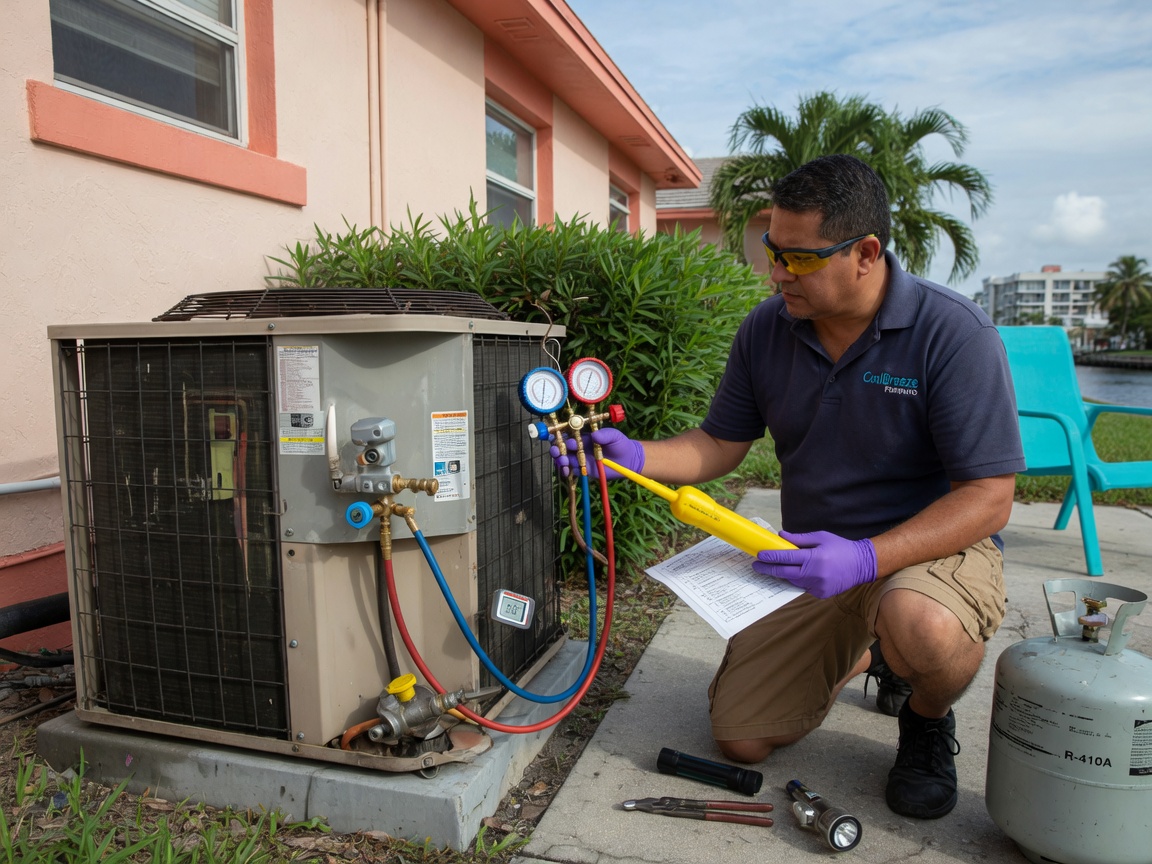
Checking air conditioner refrigerant levels starts with recognizing that homeowners cannot safely measure it themselves without EPA Section 608 certification and manifold gauges. In Pompano Beach, schedule a visit from a local HVAC tech before May to avoid failures once humidity climbs above 70 percent and daytime highs reach 88 degrees. Low refrigerant often traces to leaks at coils or line sets common in 1980s-1990s homes found in Cresthaven and Pompano Beach Highlands. Early detection keeps systems running through the tropical monsoon season without ice buildup or high electric bills.
Why Refrigerant Matters in Broward County Summers
Pompano Beach experiences hot, humid summers that push air conditioners harder than in inland Florida spots. Refrigerant absorbs heat from indoor air and releases it outside; when levels drop even 10-15 percent, the system runs longer cycles and strains the compressor. Homes near the Pompano Beach Pier or Hillsboro Inlet face salt air that accelerates corrosion on outdoor coils, creating pinhole leaks over 8-12 years. Downtown Pompano Beach condos and single-family houses in the Highlands often have R-22 or R-410A systems installed when the neighborhood expanded. Low refrigerant in these conditions leads to frozen evaporator coils and water damage on ceilings. Checking levels before summer prevents emergency calls during peak demand when Fort Lauderdale and Deerfield Beach crews stay booked for weeks.
Common Signs of Low Refrigerant in Local Homes
Watch for reduced cooling output even when the thermostat sits at 72 degrees during afternoon hours. Air coming from vents feels lukewarm after 20 minutes, or the outdoor unit runs continuously without shutting off. Ice forming on the suction line near the air handler appears more often in Cresthaven homes with older ductwork that leaks return air. Higher humidity indoors, around 60 percent or more, signals the evaporator coil cannot remove moisture properly. Strange hissing sounds near the condenser point to escaping refrigerant at braze joints stressed by daily temperature swings. These symptoms show up first in Pompano Beach Highlands where many systems date to the 1990s and face constant salt exposure.
Steps a Technician Follows to Check Levels
A certified tech arrives during business hours, connects manifold gauges to the service ports, and compares pressure readings against the manufacturer's temperature-pressure chart for the current outdoor temperature. They measure superheat and subcooling values to confirm whether the charge matches the system design, typically 10-15 degrees superheat on R-410A units common here. Visual inspection of coils and line sets follows, looking for oil stains that mark leak points. Electronic leak detectors scan joints and flare connections without releasing gas into the air. In Pompano Beach homes, techs also check for restricted airflow from dirty filters that mimic low-refrigerant symptoms. Results determine whether a top-off or full leak repair is needed before the first heat wave.
When to Schedule Service Before Summer
Book a check in March or April while mild winter days still allow easy access to outdoor units. Systems in neighborhoods like Cresthaven benefit from annual inspections because salt air shortens coil life. Pair the visit with a full HVAC repair evaluation to catch blower motor issues that compound refrigerant problems. If the unit freezes during mild winter days, review this related guide on why your air conditioner freezes up during mild winter days for additional context. Technicians from USA First A/C operate Monday through Friday 8am-6pm and Saturday 9am-2pm from their Pompano Beach base, covering nearby Deerfield Beach routes the same week.